Speaking the Same Language: How Translation and Transcription Work Inside NexGen Virtual Workplace
Live voice translation, meeting captions, and searchable transcripts, built into the workday rather than bolted onto the meeting.
An organization’s workforce is rarely in one place anymore. An engineer might sit in Kraków, a designer in São Paulo, a finance lead in Singapore, and the executive team in Chicago. That distribution is a strength. It becomes a friction point the moment people need to actually talk to each other.
NexGen Virtual Workplace addresses that friction directly with built-in translation and transcription. Live voice translation, meeting captions, and searchable transcripts are part of the workplace itself, not a separate tool someone has to remember to launch. These features are available within the NexGen Virtual Workplace platform for subscribers to use.
Conversation Without a Shared Language
Live translation lets people in a meeting hold a conversation in their preferred languages. A team member can ask a question in their native language and hear the answer in their language. A manager can give feedback without slowing down to simplify their vocabulary or repeat themselves. NexGen Virtual Workplace’s technology makes it seamless for people to access these key features.
These transcription and translation features live within the NexGen Virtual Workplace platform in real time, making it easier for people around the world to communicate and collaborate without struggling with languagebarriers. They help remove barriers so evryone can be included in the conversation and speak up. People who are competent but not confident in a second language may tend to stay quiet in meetings, contribute less in group settings, and defer to whoever is most fluent rather than whoever knows the most. By reducing the language penalty, NexGen’s virtual office can help the quiet expert become a strong contributor.
“Remove the language penalty and the quiet expert becomes a strong contributor.”
Captions That Carry Through the Room
Live captions do quiet work that is easy to undervalue. They support colleagues who read a second language more comfortably than they hear it. They help anyone joining from a noisy shared office, a home desk with a crying toddler, or a connection that drops a syllable here and there. They make sessions accessible to team members who are deaf or hard of hearing.
NexGen’s caption feature also reduces the small misunderstandings that compound over a project. A product name, a client name, a delivery date: seeing it written down while hearing it removes the guesswork. People can also look up past transcriptions as well for a reference.
Transcripts as Institutional Memory
Our transcription technology turns any conversation into an asset that can be archived. A one-on-one becomes reviewable. A project kickoff becomes a record that a colleague eight time zones away can read instead of reconstructing it from a calendar invite and a few chat replies that were written during the meeting. Tasks can be created from the meeting transcriptions so people stay on task no matter what time zone they may be in. Projects can be completed faster, and more easily. Documentation that used to require someone to sit down and write it can be pulled from what people already said.
For companies working across time zones, these features matter and help keep teams focused on collaboration and achieving milestones. Knowledge that lived in one person's head now lives somewhere the whole team can reach, in a form that can be translated for colleagues working in other languages.
Why the Virtual Office & Workplace Context Changes Things
Some organizations may offer translation tools somewhere. What is different here is where these capabilities sit.
NexGen Virtual Workplace is built on Social Presence Theory, the idea that people collaborate better when they can see each other and sense who is around. The platform lets teammates notice who is accessible with the click of a button, just like walking into someone’s physical office. No meeting links appointments are requited. Translation and transcription inside that environment extend across the whole workday, not just scheduled meetings. The quick question at someone’s desk and the impromptu huddle when something breaks are all covered.
That is the practical shift. Language support stops being something you plan for and becomes something that is simply present.
What This Opens Up
For growing companies, the hiring implication is significant. When language is no longer a hurdle to overcome, you can recruit for skill, judgment, and craft across a much wider talent pool. You can build teams around where the expertise actually is. You can bring a specialist onto a project without first confirming they share a language with the rest of the group.
For the people doing the work, the benefit is simpler. They get to be understood, and to understand, without working harder than everyone else in the room to do it.
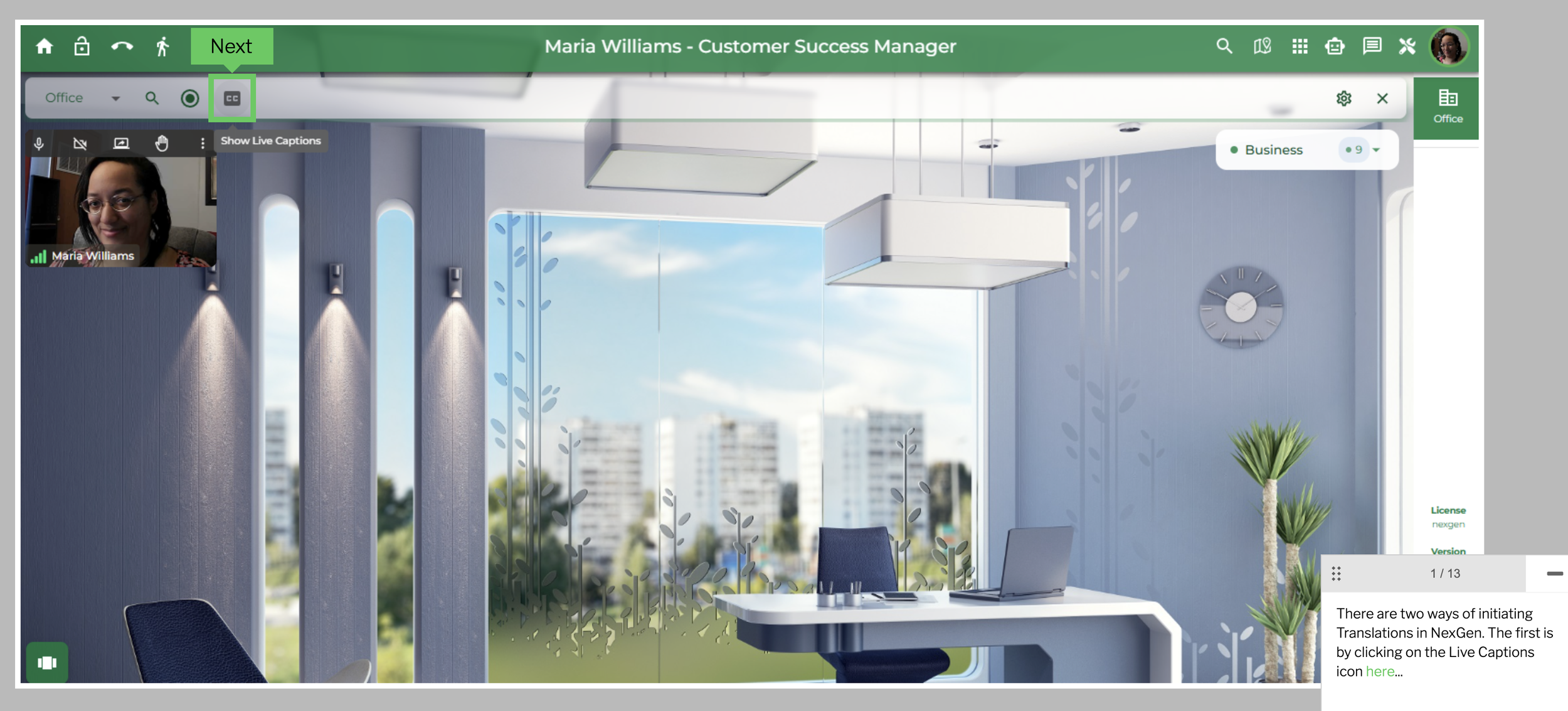
See How to Turn On Transcription & Translation
Features On
Translation:
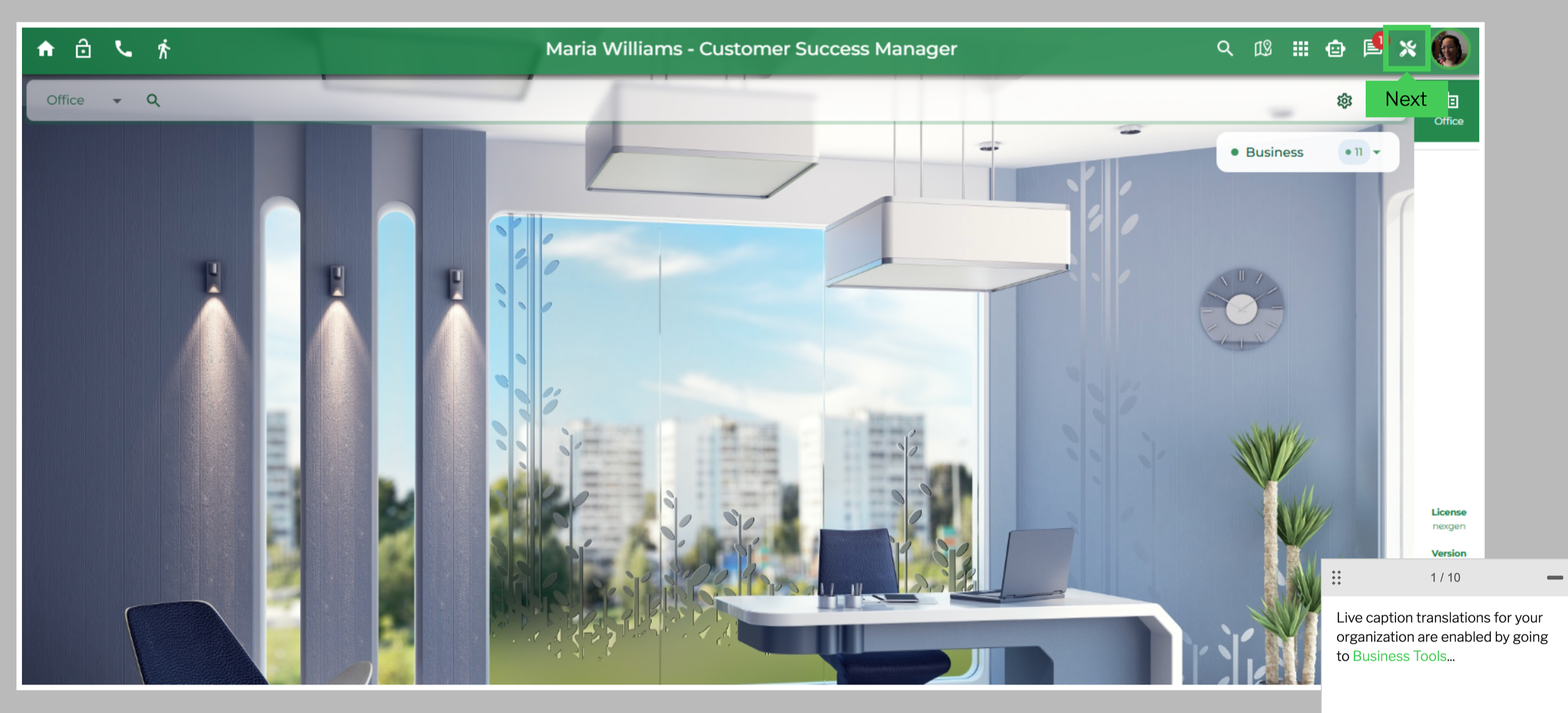
Transcription: